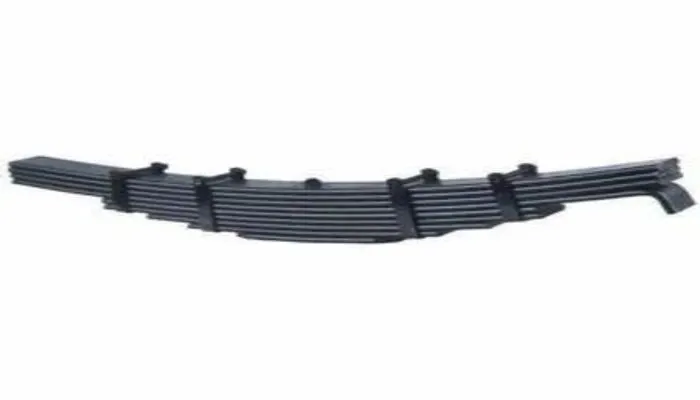
Leaf Spring
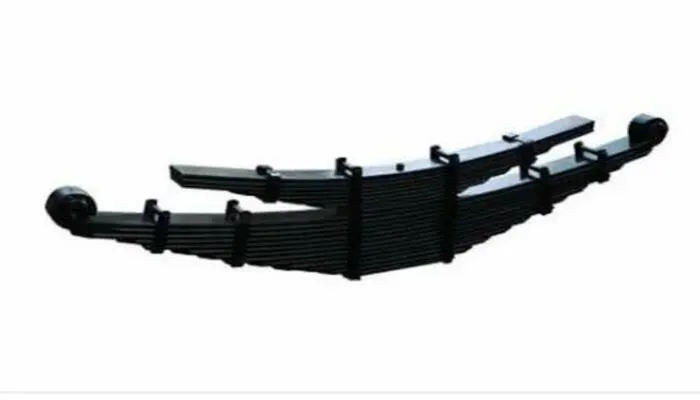
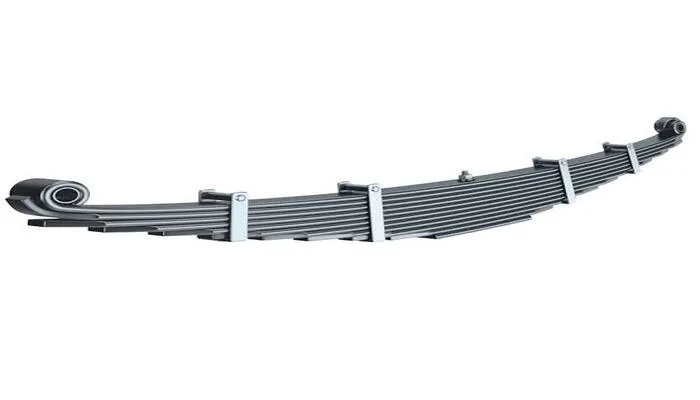
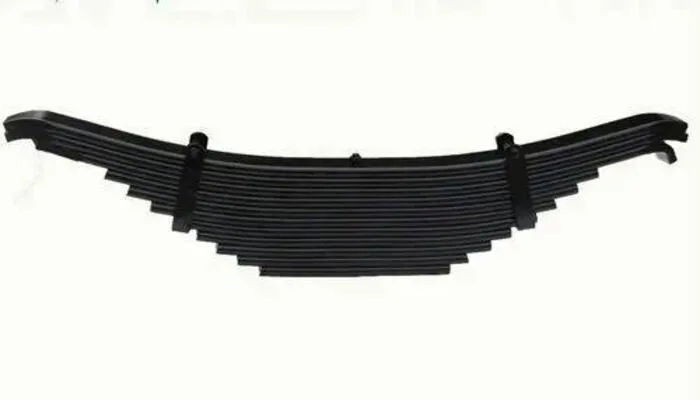
Leaf Springs
Leaf springs are a type of suspension system used in vehicles, particularly in heavy-duty trucks and trailers, as well as some off-road vehicles. They consist of a series of thin, flexible metal strips (or "leaves") that are stacked one on top of the other, with the longest leaf at the bottom and the shortest leaf at the top.
Product Description
- Leaf springs are suspension systems commonly used in vehicles, particularly in heavy-duty trucks and trailers, as well as some off-road vehicles. They are made up of several thin, flexible metal strips that are stacked together in a descending length order, forming a tapered shape.
- When the vehicle travels over a rough surface, the leaf springs flex and absorb the shock, helping to smooth out the ride. The tapering of the leaves and their overlapping design provide strength and durability, making them capable of supporting heavy loads.
- There are different types of leaf springs, including mono-leaf springs, multi-leaf springs, and parabolic springs. Mono-leaf springs have a single, thick leaf, while multi-leaf springs have several thinner leaves. Parabolic springs have a tapered, curved design that provides greater flexibility and a smoother ride.
Uses of Leaf Spring
Leaf springs are long, flat, and slightly curved springs made of multiple layers of steel or composite materials. They are commonly used in vehicles, trailers, and other heavy equipment to provide suspension and support.
- Vehicle suspension: Leaf springs are commonly used in the suspension systems of trucks, SUVs, and other heavy-duty vehicles. They provide a smooth ride and help to absorb shocks and vibrations when driving on rough roads.
- Trailer suspension: Leaf springs are also used in the suspension systems of trailers, such as boat trailers, horse trailers, and utility trailers. They help to distribute the weight of the load evenly and provide stability and support while driving.
- Agriculture and construction equipment: Leaf springs are used in a variety of agricultural and construction equipment, such as tractors, backhoes, and excavators. They provide support and stability to the heavy machinery while in use.
- Railway carriages: Leaf springs are also used in the suspension systems of railway carriages, providing a smooth ride for passengers and cargo.
- Industrial machinery: Leaf springs are used in various industrial machinery, such as cranes, elevators, and lifts. They help to support the weight of the machinery and reduce the impact of vibrations and shocks.
- Military vehicles: Leaf springs have also been used in military vehicles, such as tanks and armored personnel carriers, due to their durability and ability to withstand rough terrain and heavy loads.
Formula of leaf spring
The calculation of the spring rate of a leaf spring depends on several factors, including the number of leaves, the thickness and width of the leaves, and the length of the spring. The spring rate is a measure of how much weight is required to compress the spring by a certain distance.
The formula to calculate the spring rate of a leaf spring is:
Spring rate = (6 * No. of leaves * Width of leaf * Thickness of leaf^3) / (Effective length of spring * (No. of leaves + 1)^4)
Where:
- No. of leaves = the number of leaves in the leaf spring
- Width of leaf = the width of each leaf in the leaf spring
- Thickness of leaf = the thickness of each leaf in the leaf spring
- Effective length of spring = the distance between the center of the front eye and the center of the rear eye of the spring
The spring rate is usually expressed in pounds per inch (lb/in) or Newtons per millimeter (N/mm).