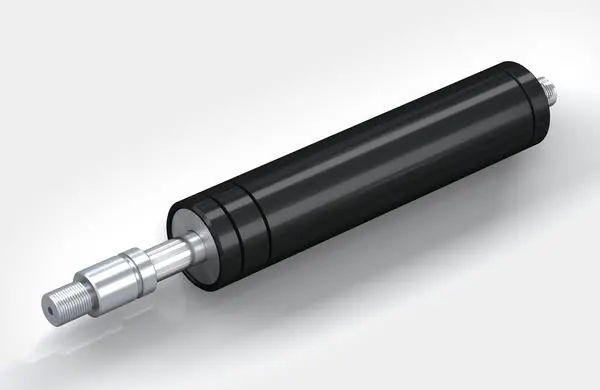
Gas Spring
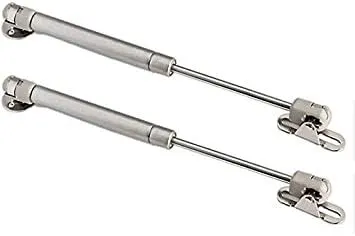
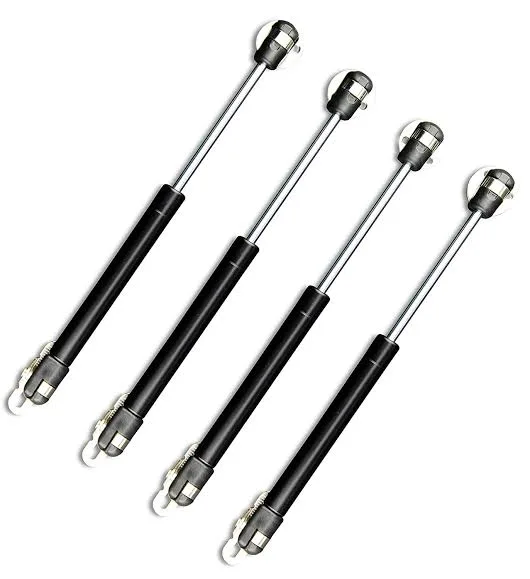
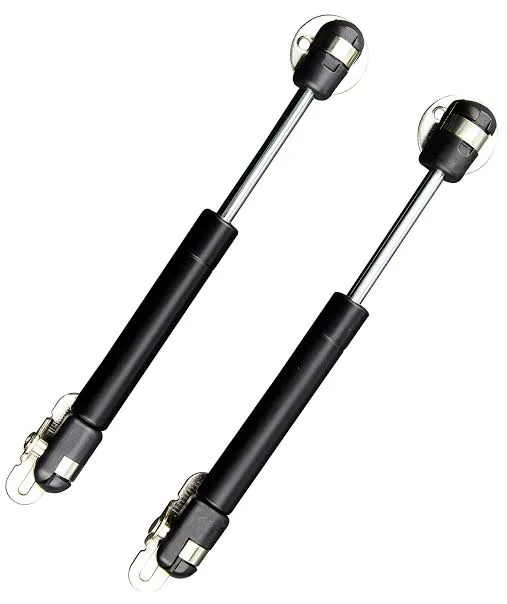
Gas Springs
A gas spring, also known as a gas strut or gas lift, is a mechanical device that uses compressed gas to generate a force in a linear direction. It consists of a cylinder filled with pressurized gas, typically nitrogen, and a piston with a rod that extends from one end of the cylinder.
Product Description
- Gas springs, also known as gas struts, are mechanical devices that use compressed gas to generate a force in a linear direction. They are commonly used in a variety of applications where controlled motion, lifting, or counterbalancing is required.
- The basic components of a gas spring include a cylinder, piston, and a rod that extends out from the piston. The cylinder is filled with a pressurized gas, typically nitrogen, which creates the force that moves the piston and rod.
- When a force is applied to the rod, the gas inside the cylinder compresses, generating a force that pushes the piston and rod out of the cylinder. As the force on the rod decreases, the gas expands, and the piston and rod retract back into the cylinder.
- Gas springs are widely used in a variety of applications, including automotive hoods and trunks, furniture, medical equipment, and industrial machinery. They provide a reliable and controlled means of motion, reducing the risk of injury and damage to equipment.
Uses of Gas Spring
Gas springs are widely used in various industries and applications where controlled and precise movement, lifting, or counterbalancing is required, providing a reliable and safe means of operation.
- Automotive: Gas springs are widely used in automobiles, particularly for opening and closing hoods, trunks, and tailgates. They provide controlled and smooth movement, reducing the risk of injury and damage to the vehicle.
- Furniture: Gas springs are used in various types of furniture, such as office chairs, recliners, and cabinets, to provide adjustable and comfortable seating positions and easy access to storage compartments.
- Medical equipment: Gas springs are used in medical equipment, such as hospital beds and examination tables, to provide easy and safe adjustments for patients and medical professionals.
- Industrial machinery: Gas springs are used in a variety of industrial machinery, such as packaging equipment, conveyor systems, and machine guards, to provide safe and controlled movement and reduce the risk of injury to workers.
- Aerospace: Gas springs are used in aircraft and spacecraft applications, such as cargo doors, cockpit canopies, and satellite deployment mechanisms, to provide controlled and precise movement in extreme environments.
- Marine: Gas springs are used in marine applications, such as boat hatches and engine covers, to provide easy and safe access and to hold heavy items in place.
Formula of Gas spring
Gas springs can be customized for specific applications by adjusting the pressure of the gas inside the cylinder, the effective area of the piston, and the length and diameter of the rod, among other factors.
The force exerted by a gas spring can be calculated using the following detailed formula:
F = (P * A * (sqrt(L^2 - (x + y)^2) - sqrt(L^2 - x^2))) - (P * (A_rod / A) * (sqrt(L^2 - (x + y)^2) - sqrt(L^2 - (x + y - l_rod)^2)))
Where:
- F is the force exerted by the gas spring
- P is the pressure of the gas inside the cylinder
- A is the effective area of the piston (calculated as (π/4) * (D^2 - d^2), where D is the diameter of the piston and d is the diameter of the rod)
- L is the length of the gas spring when fully extended
- x is the current position of the gas spring (the distance from the fully extended position)
- y is the length of the gas spring when fully compressed
- A_rod is the area of the rod (calculated as (π/4) * d^2)
- l_rod is the length of the rod
This formula takes into account the fact that the force exerted by a gas spring varies as the piston moves through its range of motion. When the gas spring is fully extended, the force is equal to P * A. As the piston moves inward, the force decreases until the gas spring is fully compressed, at which point the force is zero. The second term in the formula accounts for the force exerted by the rod as it compresses, which opposes the force exerted by the piston.